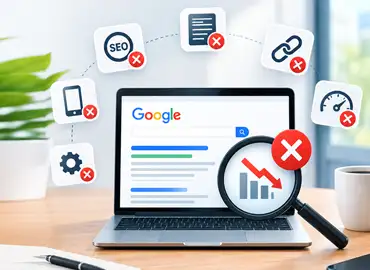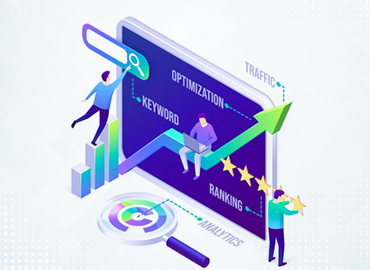



One of the most powerful tools that businesses can use to boost their visibility on the internet, reach targeted traffic, and drive long-term organic traffic is search engine optimization (SEO). Simply having a website and adding keywords does not guarantee higher rankings. There are common mistakes that businesses tend to make in SEO that prevent their websites from reaching their full potential.
These errors can have an impact on rankings, traffic, user experience, and conversions. By understanding and avoiding them, businesses can create a stronger search presence and ensure sustainable growth.
1. Not choosing the proper keywords.
It is one of the most frequent SEO blunders that people make when picking keywords. This doesn't necessarily mean that a keyword with thousands of monthly searches will attract relevant customers.
When choosing keywords, companies should take into account search intent, the competition, relevance, and the potential for conversion. When a person types in the terms "what is SEO", they might just be looking for information, while if they type the terms "SEO company in Kuwait", they might be actively looking for a company that provides such a service.
Informational, commercial, and transactional keywords must be part of a successful keyword strategy for each stage of the customer journey.
From ignoring search intent to neglecting technical SEO, these mistakes can affect rankings, traffic, user experience, and conversions. Understanding and avoiding mistakes can help businesses build a stronger search presence and achieve sustainable growth.
2. Keyword Stuffing
In the past, it was possible for businesses to boost their rankings by utilizing the same keyword many times on a page. The use of too many keywords can make content hard to read and can impact the overall quality of a page.
Businesses should refrain from stuffing keywords into every paragraph and instead place them naturally in headings, body, image ALT tags, URL, titles, and meta descriptions as appropriate. The first thing that should always be done is to create content that is user- and search engine-friendly.
3. Ignoring Search Intent
Before writing content, businesses should analyze the search results and understand what kind of content Google is displaying. Aligning content with the search intent can enhance relevance, engagement, and organic results.
For example, if users are searching for a service page, posting a generic blog may not meet the requirements. Similarly, an informational query may not be best served by a heavily promotional sales page.
4. Publishing Low-Quality or Thin Content
Creating a large number of pages is not necessarily a sign of good SEO. Content that has little or no useful information, duplicate content, or content that does not offer any value to the reader may not rank well.
The business should aim to produce content that is beneficial, unique, and comprehensive, which answers the user's query.
Rather than writing a number of short articles on similar subjects, one could think of building up authoritative resources on a topic that would cover it in detail. Use appropriate examples, useful information, statistics (where relevant), FAQs, and explanations.
5. Neglecting Technical SEO
Technical SEO is the base of a website's visibility in search engines. However, even the best content can suffer if a search engine cannot crawl, render, and index a website.
Common technical issues include:
-
Broken links
-
Incorrect canonical tags
-
Poor URL structures
-
Missing XML sitemaps
-
Incorrect robots.txt directives
-
Duplicate pages
-
Slow page speed
-
Mobile usability problems
-
Redirect errors
-
Indexing issues
Proper technical SEO analysis can be performed regularly to find and resolve these issues before they have a negative impact on organic results.
6. Having Poor Website Speed
Site speed is crucial for SEO and user experience. Visitors are less likely to stay on a website if pages take too long to load.
Slow websites can be caused by large images, unessential plugins, too many scripts, bad hosting, or unoptimized code.
Images should be optimized, any unnecessary scripts should be removed, caching should be implemented if applicable, server performance should be optimized, and key page experience metrics should be checked.
Faster website performance can lead to a better user experience and improve a website's performance.
7. Ignoring Mobile SEO
Many Internet users view Web pages with their smartphones. Having a web page that looks great on desktop but isn't easy to use on mobile will result in the loss of visitors and customers.
It is crucial for businesses to make their websites mobile-friendly and responsive to various screen sizes. The text should be readable, buttons should be easy to tap, navigation should be easy, and important information should be available without scrolling or zooming.
Mobile usability should be taken into account when designing, creating, and optimizing a website.
8. Writing Poor Title Tags and Meta Descriptions
Title tags and meta descriptions are crucial for users to understand the content of a webpage.
A general term like “Home” or “Services” doesn't convey much. Instead, a business should develop descriptive titles that clearly convey the content of the page and, if applicable, include primary keywords.
Meta descriptions should also be informative and clarify the site's value to users, with a feel that encourages users to click from search results.
Each page needs to have a different and meaningful page title and meta description.
9. Ignoring Internal Linking
Internal links are links that connect various pages of a website, enabling users to locate related content within the website. They can also aid search engines in comprehending the framework and connections among pages.
For instance, an e-commerce blog post could be connected with an appropriate ecommerce development services page. This makes for a handy user navigation path and an important search engine path.
It is advisable to create a logical internal linking structure and use descriptive anchor text instead of using general anchor text such as “click here”.
10. Neglecting Local SEO
Local SEO can be very beneficial for local businesses. However, numerous companies don't optimize their online content for local search.
Important local SEO activities include:
-
Optimizing the Google Business Profile
-
Maintaining consistent business information
-
Building relevant local citations
-
Creating location-specific content
-
Collecting genuine customer reviews
-
Optimizing service and location pages
-
Building relevant local backlinks
11. Buying Low-Quality Backlinks
While backlinks can contribute to establishing authority, not all backlinks are equal. Buying a ton of irrelevant or poor-quality links can introduce unwarranted risks and yield minimal SEO benefits.
The goal of businesses should be to obtain links from trusted websites in the same niche. Healthy backlinks can be achieved through quality content, digital PR, industry partnerships, useful resources, guest contributions, and genuine business relationships can all contribute to a healthier backlink profile.
The objective should be relevance and authority rather than simply increasing the number of backlinks.
12. Ignoring Analytics and Search Console Data
SEO is a marketing approach that takes time. Businesses need to monitor performance and understand what is happening with their websites.
The amount of time before results can be seen can vary based on elements like website authority, competition, content quality, website technical health, backlinks, the industry, and the effectiveness of the SEO strategy.
Tools such as Google Search Console and Google Analytics can provide valuable insights into organic traffic, search queries, indexing issues, clicks, impressions, engagement, and conversions.
Regularly reviewing this data allows businesses to identify successful pages, discover new keyword opportunities, and address technical or content-related problems.
How Businesses Can Avoid These SEO Mistakes
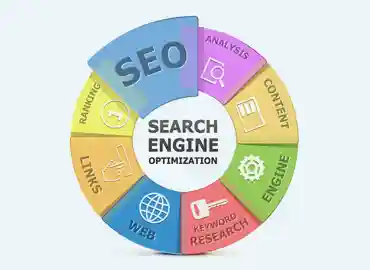
Avoiding SEO mistakes requires a structured and continuous approach. The initial step to take is to perform keyword research and competitor analysis, then optimize website technical aspects, create high-quality content, optimize on-page elements, and undertake local SEO, link building, and authority building.
It is also essential to have regular SEO audits. They can assist in finding broken links, indexing problems, duplicate content, lack of metadata, slow pages, and more, which can impact organic visibility.
Most importantly, businesses should focus on the overall user experience. Search engines aim to provide users with useful and relevant results, so websites that genuinely help their audiences are better positioned.
Conclusion
SEO is more than adding keywords to a website. It requires a combination of technical optimization, on-page optimization, keyword research, strong website structure, local visibility, quality backlinks, and continuous performance monitoring.
By avoiding common mistakes such as keyword stuffing, poor content, technical SEO issues, slow loading speeds, weak internal linking, and neglecting local SEO, businesses can create a stronger foundation for organic growth.
SEO success does not come from a single optimization. It comes from consistently improving the website, understanding the audience, monitoring performance, and adapting the strategy as the search engine evolves.